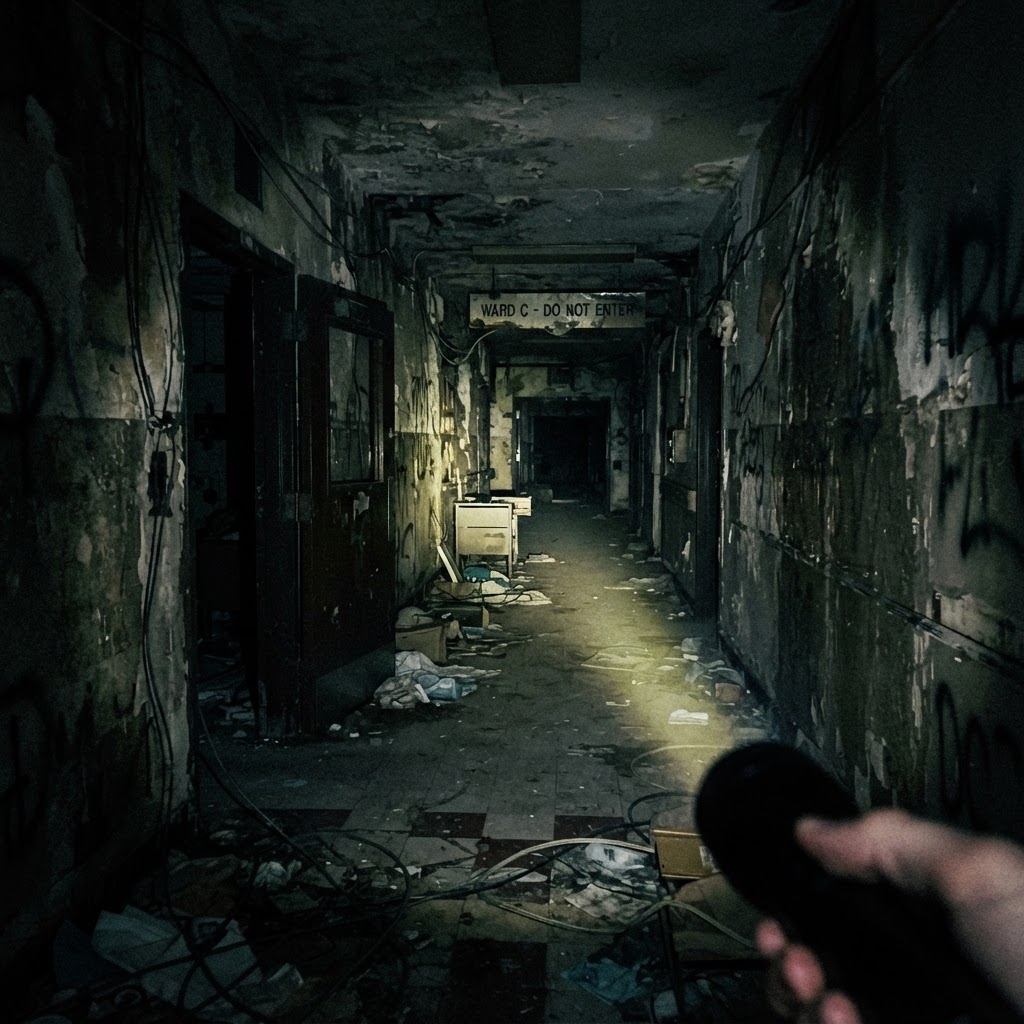
Aliens at 40: Why Comparing It to Alien Is the Wrong Argument
Forty years after James Cameron dropped one of the greatest sequels ever made, we're still asking the wrong question. It was never Alien vs. Aliens. It was always both.
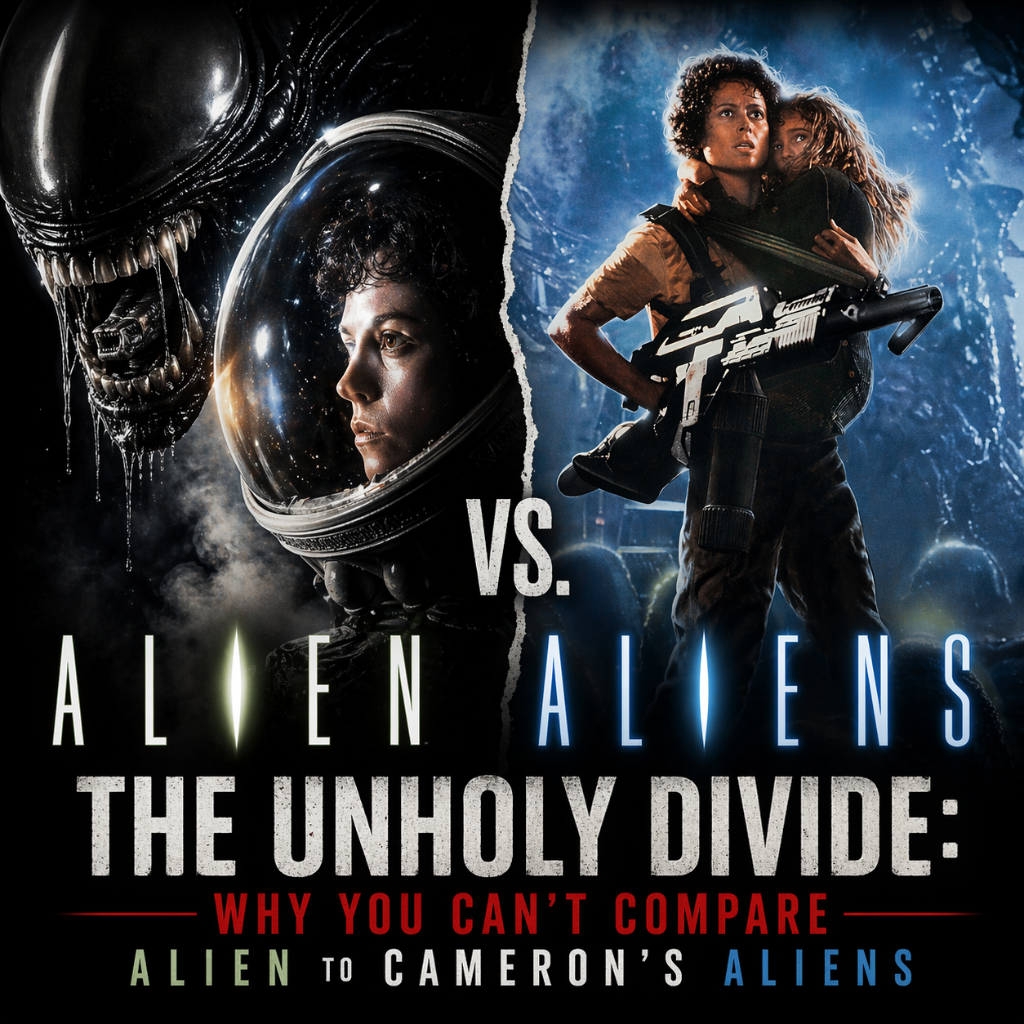
Let's settle this once and for all — not by picking a winner, but by retiring the fight altogether.
Forty years ago, James Cameron walked into one of cinema's most impossible situations: follow up Ridley Scott's Alien — a film so perfect in its dread and restraint it felt less like a movie and more like a nightmare you couldn't wake up from. The conventional wisdom said it couldn't be done. The conventional wisdom was wrong.
Aliens didn't just survive the comparison. It obliterated the need for one.
Two Films, Two Entirely Different Beasts
Scott's Alien (1979) is a haunted house movie set in space. It's about isolation, claustrophobia, and the primal terror of being hunted by something you don't understand and can never outrun. The Xenomorph in Scott's world is singular — a shadow, a presence, an idea more than a creature. You feel it before you see it. When you finally do see it, you almost wish you hadn't.
Cameron's Aliens (1986) is a war movie. A siege film. A survival epic wrapped in military hardware and saturated with the kind of testosterone-charged camaraderie that only breaks down when everything goes to hell. Cameron took Scott's singular nightmare and multiplied it by hundreds — and somehow, paradoxically, made it less scary and more terrifying at the same time.
Less scary because you're no longer alone in the dark. More terrifying because now you know how bad it can really get.
James Cameron Is an Action Filmmaker First — And That's a Gift
Here's where the discourse gets lazy: people treat Cameron's action roots like a limitation when making Aliens. As if the marines, the guns, the pulse rifles and the power loader are somehow a betrayal of what came before. They're not. They're the whole point.
Cameron didn't stumble into Aliens. He engineered it. His entire body of work tells you who this man is:
- The Terminator (1984) — A relentless, machine-paced thriller that established Cameron's gift for action that means something. T-800 isn't just a cool villain; it's a metaphor for fate, dressed in chrome.
- Aliens (1986) — Action as trauma response. Every gunfight, every corridor run, is Ripley processing what she survived and refusing to be a victim again.
- The Abyss (1989) — Proves Cameron can strip away the spectacle and find something tender and human underneath the pressure.
- Terminator 2: Judgment Day (1991) — Possibly the greatest action-blockbuster sequel ever made. Bigger, faster, smarter — and somehow more emotionally devastating than the original.
- True Lies (1994) — Pure genre craft at its peak. A spy thriller that knows exactly what it is and executes it with surgical precision.
- Titanic (1997) — Dismissed as melodrama by the cool kids until it swept the Oscars and became one of the highest-grossing films in history. Cameron's secret weapon has always been sincerity.
- Avatar (2009) — You can argue the script. You cannot argue the vision. Cameron built a world from scratch and changed how cinema looks.
This is the work of a filmmaker who doesn't compromise. Who goes all the way, every time, regardless of budget, technological limitation, or critical consensus. Cameron is the kind of director who invents new camera systems when the existing ones won't capture what he sees in his head.
That obsessive, maximalist, go-harder energy is exactly what Aliens needed.
What Cameron Understood That Critics Missed
Ripley in Alien survives on instinct, luck, and the desperate intelligence of someone who has nothing left to lose. She wins by the skin of her teeth, alone, terrified.
Ripley in Aliens is different. Fifty-seven years have passed for her body, but psychologically she's been frozen at the moment of that first encounter. Cameron's genius move was making Aliens about her trauma as much as her action heroism. She doesn't want to go back. She goes anyway. And when she picks up that pulse rifle, it's not swagger — it's someone who has decided that she will never be that helpless again.
Sigourney Weaver was nominated for an Academy Award for Best Actress for this performance. For an action movie. In 1987. Think about what that means.
Cameron gave us the template for the modern action hero — not invincible, not detached, but damaged and determined. Every great action protagonist since owes something to what Weaver and Cameron built in those corridors on LV-426.
The Comparison Is the Enemy of Appreciation
When you pit Alien against Aliens, you're essentially asking whether you prefer jazz or blues. Whether you'd rather read Cormac McCarthy or Ernest Hemingway. Whether slow dread is better than kinetic terror.
These aren't answerable questions. They're taste questions. And taste isn't a ranking system.
What we can say, with absolute certainty, is this: Alien is a masterpiece of atmosphere, patience, and existential horror. Aliens is a masterpiece of craft, character, and controlled chaos. Both films are operating at the absolute peak of what their genres can achieve. Both are studying the same creature from completely different distances.
One asks: what is this thing?
The other asks: what do we do now that we know?
Forty Years Later, Aliens Has Only Grown
The practical effects hold. The performances hold. Bill Paxton's Hudson is still one of the great comedic-turned-tragic soldiers in film history. Lance Henriksen's Bishop remains the gold standard for synthetic humanity. Michael Biehn's Hicks is the kind of stoic, decent man that action movies rarely bother to write anymore.
And that final act — Ripley in the power loader, facing the Queen, screaming "Get away from her, you bitch" — forty years on, it still lands like a gut punch. It always will.
Cameron built something that doesn't age. Not because it transcends its era, but because it fully, completely, fearlessly embodies it. Aliens is 1986 at its absolute maximum — practical effects, raw machismo undercut by genuine feeling, action choreography before CGI sanitized everything, and a director who had something to prove and proved it beyond any reasonable doubt.
The Verdict
Forty years later, the answer isn't Alien or Aliens.
The answer is: watch both. Back to back. And recognize that you're witnessing two different filmmakers, two different philosophies, and two different kinds of greatness — all wearing the same face.
Horror has room for both the whisper and the scream.
James Cameron gave us the scream. And forty years later, we're still not done hearing it.
Happy 40th, Aliens. You magnificent, relentless thing.